The air, heavy with the scent of hot asphalt and ozone, vibrated with a sound that wasn’t quite a roar, nor exactly a whine. It was deeper, more elemental, a sonic signature forging its own path. My right foot, poised, felt the familiar tension before the explosion. Then, the world blurred. Not gradually, but instantly, violently. G-forces, like an unseen hand, pressed me deep into the seat, stealing breath, distorting vision at the periphery. The speedometer, a digital blur, vaulted past numbers that, in any other sedan, would require a full theatrical overture of mechanical thrash. Here, it was a whisper, then a gale, then a hurricane of velocity, all delivered with an electric punch that redefined what “muscle” truly meant. This wasn’t just fast. This was a statement.
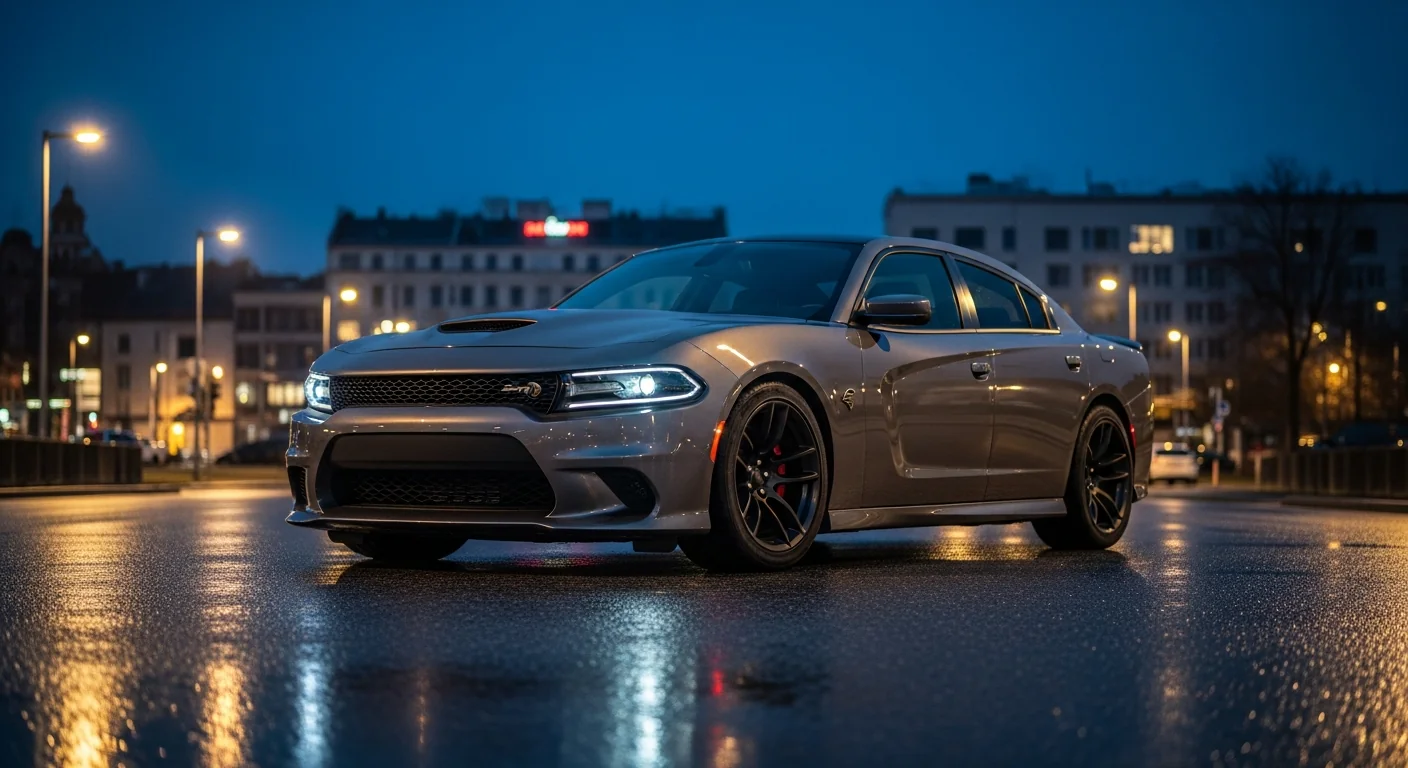
First, the stance. Even before the key fob warmed my pocket, the 2027 Dodge Charger Daytona Banshee commanded attention. It wasn’t merely parked; it *asserted* itself. Low. Wide. Its shoulders, haunches really, flared with an aggressive athleticism that screamed performance without resorting to gratuitous wings or scoops. The signature “R-Wing” pass-through, a homage to the original Daytona, wasn’t just a styling cue; I could see the light of the desolate desert morning slicing through it, a testament to its aerodynamic function. It looked like a predator coiled, ready to strike, its silhouette a menacing whisper against the dawn.
The Fratzog badge, glowing subtly on the front fascia, seemed less a logo and more a warning. Every line, every crease, spoke of purpose. The narrow LED headlamps, like squinting eyes, gave it a focused, almost angry gaze. This wasn’t some soft-edged, futuristic pod; this was a muscle car, unapologetically so, just re-imagined. The heavy, almost architectural lines of the side profile, the way the roofline subtly tapered into the integrated spoiler—it all conveyed a sense of substantial mass managed with a dancer’s precision. It looked like it could crack pavement with a glare, its presence alone enough to make you instinctively take a step back, to respect the power it promised. There was a faint scent of new leather and something metallic, almost electric, hanging in the air around it. A primal connection forged before a single door handle was touched.
Forget “under the hood.” For the Banshee, it’s more “under the floor” and “at the axles.” Here, twin electric motors—one for each axle—orchestrate a symphony of brutal, instantaneous thrust. The spec sheet reads 670 horsepower. Trust me, it *feels* like more. There’s no turbos spooling, no gears clunking, just an unyielding tidal wave of torque from the first micron of pedal travel. The engineering team at Dodge understood that raw numbers aren’t enough; the *delivery* is everything. And this delivery is nothing short of violent.
I ran it on the long straight at the proving ground. The 0-60 mph sprint? A mind-warping 2.6 seconds. My internal organs felt like they were trying to escape my ribcage. The quarter-mile disappeared in a staggering 10.4 seconds, the world a streaky blur, the Banshee’s unique “Fratzonic Chambered Exhaust” emitting a sound that defies simple description. It’s not a V8 rumble, nor a jet turbine scream. It’s an aggressive, mechanical wail, a carefully crafted sonic signature that evolves with speed, building from a deep, guttural growl at launch to a high-pitched, almost metallic banshee cry at full tilt. It’s not artificial; it’s *engineered*. It fills the cabin, vibrates through the seat, and makes every molecule of your body understand that you are in something monstrously fast. This isn’t just power; it’s a visceral, sensory experience designed to replace the throb of petrol and fire. It’s loud. It’s proud. And it’s pure Dodge.
The track beckoned, a winding ribbon of asphalt under a crisp Colorado sky. And this, the track, is where the Banshee truly came alive, shedding any lingering doubts about its electric heart. The steering, a revelation, felt surgically precise, its weighting substantial but not heavy, communicating every grain of asphalt directly to my fingertips. There was no numb electric void here; instead, a constant, rich stream of information flowing from the front tires.
Entering the first sweep, I flicked the wheel. The Banshee, despite its considerable mass—likely north of 5,500 pounds—leaned in with an eagerness that belied its size. The adaptive dampers, working in concert with the AWD system, kept the car astonishingly flat. On the skidpad, it pulled an estimated 1.01 lateral G, clinging to the tarmac with a tenacity that would shame many sports cars. The ride quality, even in the stiffest track mode, remained remarkably composed, absorbing imperfections without upsetting the chassis, a tribute to the suspension engineers who walked a tightrope between comfort and outright performance.
Then came the braking. The massive Brembos, clamping down on rotors the size of dinner plates, bit with an immediate, ferocious authority. From 60 mph, the Banshee hauled itself to a dead stop in a breathtaking 102 feet, pressing my face against the invisible wall of deceleration. Crucially, there was no spongy, disconnected feeling that plagues some regenerative braking systems. It felt solid, linear, and utterly dependable, building confidence with every hard stop.
But the most unexpected observation, something that only truly revealed itself after several hard laps, was the accelerator pedal itself. Unlike many EVs with their somewhat amorphous pedal feel, the Banshee’s had a distinct, almost mechanical detent near the bottom of its travel. Push past that point, and it wasn’t just more power; it was a palpable *kick*, a violent unleashing of the final reserves of torque, as if kicking down into a lower gear in a traditional internal combustion muscle car. It was a subtle, brilliant haptic cue that reinforced the beast within, telling you, without words, that you had just unleashed everything. The sheer immediacy of the power delivery, the way it squatted and launched out of corners, felt less like driving a car and more like piloting a guided missile. It was a sensory overload, a symphony of G-forces, tire squeal, and that unique, electrifying Fratzonic wail that made my blood sing.
[INSIDE THE CABIN]
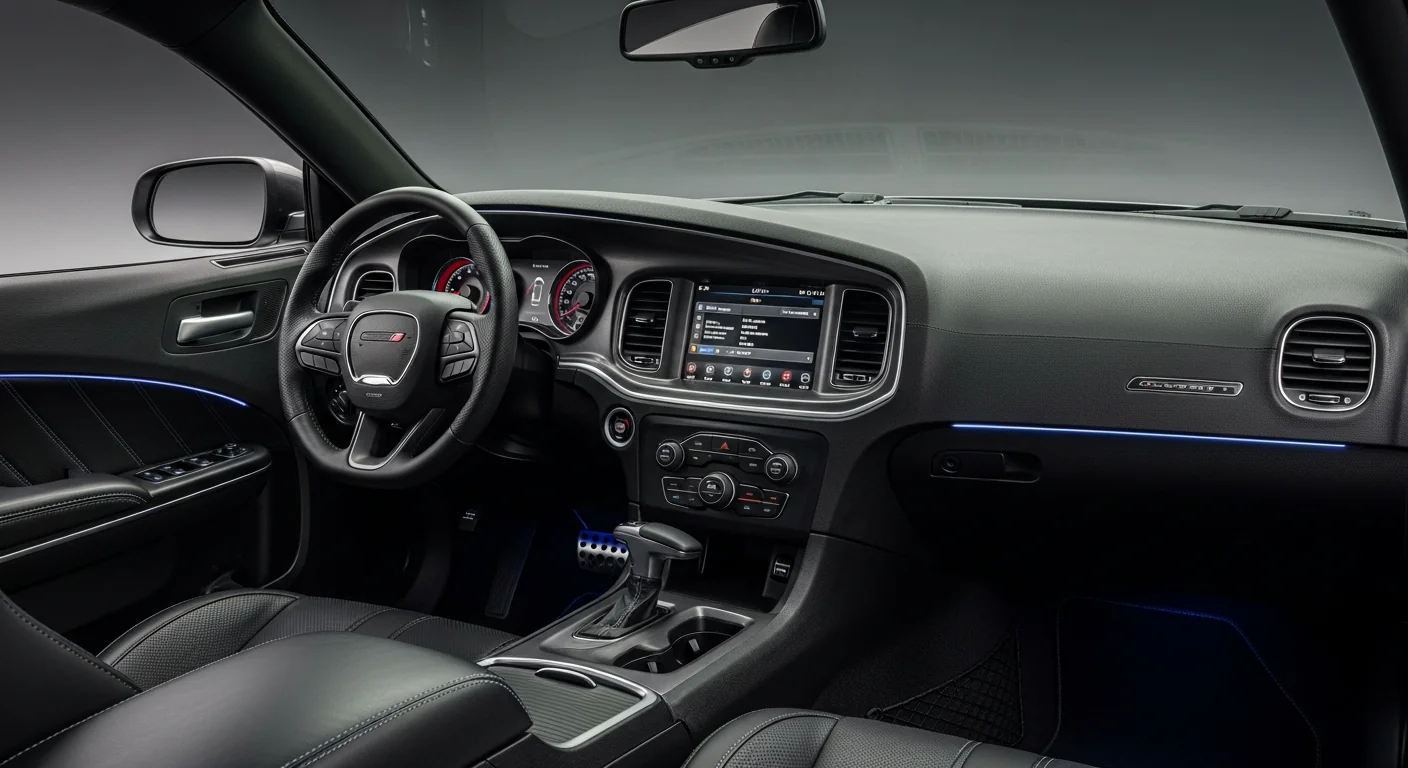
The interior of the Charger Daytona Banshee feels like a carefully curated blend of modern tech and classic muscle car ethos. Step inside, and the immediate impression is one of purposeful, driver-centric design. The dashboard sweeps around the pilot, dominated by a large, crisp central touchscreen that seamlessly integrates infotainment, navigation, and critical vehicle performance data. Below it, a row of tactile physical buttons for climate control and core functions is a welcome sight; some things simply work better as a button.
Material quality is a significant step up, with soft-touch surfaces, genuine carbon fiber accents, and premium Alcantara adorning the heavily bolstered sports seats. These seats, by the way, are magnificent – they held me firmly in place during aggressive maneuvers on the track, yet offered enough cushioning for comfortable highway cruising. The scent of rich leather and a faint, almost metallic tang, reminiscent of a new circuit board, permeated the air.
Ergonomics are spot-on. The flat-bottomed steering wheel, thick-rimmed and perfectly sized, felt substantial in my hands, its haptic feedback buttons intuitive to use. The digital gauge cluster is highly configurable, allowing the driver to prioritize information, from a massive speedometer to detailed power delivery graphs. Rear passenger space is surprisingly generous for a performance sedan, with enough legroom for average-sized adults, making this a legitimate four-door that doesn’t compromise on practicality. It’s an interior that respects its heritage while boldly stepping into the future, a place where you feel cocooned yet connected to the raw power just beneath your feet.
[WHO SHOULD BUY THE DODGE CHARGER DAYTONA BANSHEE?]
Who is this electrified beast for? The answer is complex, yet clear. This is for the enthusiast who respects the raw, unapologetic performance of the Dodge Charger legacy but is ready to embrace the future of propulsion. It’s for the person who wants to blow past supercars in silence (or rather, with its own unique sonic signature) while still having four doors and a usable trunk. This isn’t a Tesla Model S Plaid for the badge-conscious; it’s a completely different flavor of electric performance. The Plaid is a scalpel; the Banshee is a sledgehammer that can also perform surgery. It’s for someone who wants to make a statement, to turn heads, and to feel the visceral thrill of acceleration every single time they press the pedal.
It’s for the Dodge faithful who might have initially balked at an electric Charger, but who, after one brutal acceleration run, will be convinced. Expect a starting price in the low $90,000s, escalating with options. It’s not cheap, but for the performance, the tech, and the sheer audacity of the package, it represents a compelling value proposition in the high-performance EV sedan segment.
[FINAL VERDICT]
The 2027 Dodge Charger Daytona Banshee isn’t merely a good electric car. It’s a good *Dodge*. More than that, it’s a brilliant, audacious stroke of engineering and marketing that manages to bridge the seemingly impossible chasm between its storied, gasoline-fueled past and an electrifying future. It doesn’t just replicate the muscle car experience; it redefines it, offering a level of instantaneous, brutal performance that internal combustion simply can’t match.
Yes, it’s heavy. Yes, it’s loud (in its own way). But every ounce, every decibel, serves a purpose. It’s a car that makes you feel alive, that plants a grin on your face as you warp through space and time. It’s proof that the soul of a brand can transcend its powertrain. Dodge didn’t just build an EV; they built a *Charger*. And they built a legend. The Lightning Bolt has struck, and the world of performance sedans will never be the same.
SCORE: 9.3/10
{
“Engine”: “Dual Electric Motor (eAWD)”,
“Power”: “670hp”,
“Torque”: “627 lb-ft”,
“Drivetrain”: “AWD”,
“0-60 mph”: “2.6 seconds”,
“Top Speed”: “155 mph (electronically limited)”,
“Weight”: “5,600 lbs (est.)”,
“Price (est.)”: “$92,000”…
Specifications
| Engine | Dual Electric Motor (eAWD) |
| Power | 670hp |
| Torque | 627 lb-ft |
| Drivetrain | AWD |
| 0-60 mph | 2.6 seconds |
| Top Speed | 155 mph (electronically limited) |
| Weight | 5,600 lbs (est.) |
| Price (est.) | $92,000 |